
The Application Gallery features COMSOL Multiphysics® tutorial and demo app files pertinent to the electrical, structural, acoustics, fluid, heat, and chemical disciplines. You can use these examples as a starting point for your own simulation work by downloading the tutorial model or demo app file and its accompanying instructions.
Search for tutorials and apps relevant to your area of expertise via the Quick Search feature. Note that many of the examples featured here can also be accessed via the Application Libraries that are built into the COMSOL Multiphysics® software and available from the File menu.
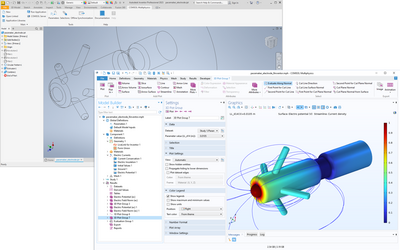
This model, dealing with the current and potential distribution around one pair of electrodes, demonstrates how to synchronize and modify geometry in Inventor® by using the LiveLink™ interface with a parametric sweep. Read More
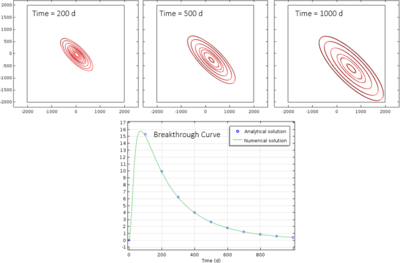
Predicting the transport of solutes that move with subsurface fluids is of general interest in environmental engineering and geosciences. Solutes may not only be pollutants but also artifical tracers added to the groundwater for investigation purposes. This model tracks a solute over ... Read More
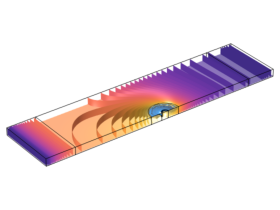
In friction stir welding, a rotating tool moves along the weld joint and melts the aluminum through the generation of friction heat. The tool’s rotation stirs the melted aluminum such that the two plates are joined. In this model, two aluminum plates are joined by generating friction ... Read More
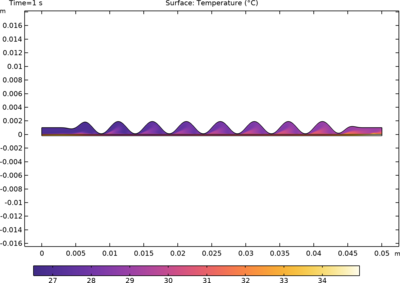
The heat exchanger in this tutorial model contains a dynamic wall with an oscillating wave shape. The deformation induces mixing in the fluid and reduces the formation of thermal boundary layers. Hence, it increases heat transfer between the walls and the fluid. In addition, the wave ... Read More
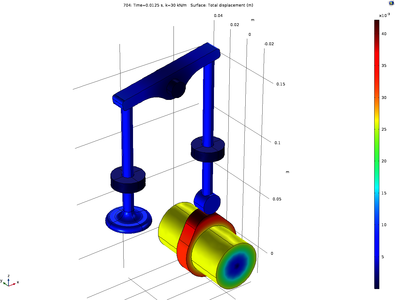
In this example, a spring-loaded valve-opening mechanism consisting of a rocker arm and a radial cam is studied. All of the system components are modeled as rigid and are connected through prismatic, hinge, and slot joints. The cam-follower connection as well as other joint connections ... Read More
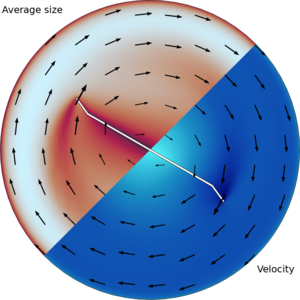
Nanoparticles have become widely used in a range of applications. For example, in pharmaceuticals, particles on the nanoscale, such as nanocrystals, are often used as an effective means of drug delivery. Meanwhile in material sciences, nanoparticle coating is an increasingly common way ... Read More
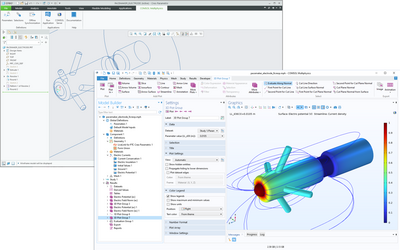
This model, dealing with the current and potential distribution around one pair of electrodes, demonstrates how to synchronize and modify geometry in PTC Creo Parametric™ by using the LiveLink™ interface with a parametric sweep. Read More
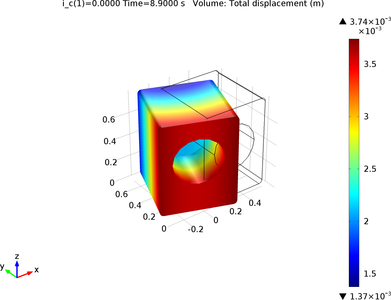
Walking instability due to the nonuniform distribution of clothes is a common problem in lightweight portable washing machines. This problem is more severe in horizontal-axis washing machines, which are widely used because of their high efficiency despite their higher manufacturing ... Read More


