
The Application Gallery features COMSOL Multiphysics® tutorial and demo app files pertinent to the electrical, structural, acoustics, fluid, heat, and chemical disciplines. You can use these examples as a starting point for your own simulation work by downloading the tutorial model or demo app file and its accompanying instructions.
Search for tutorials and apps relevant to your area of expertise via the Quick Search feature. Note that many of the examples featured here can also be accessed via the Application Libraries that are built into the COMSOL Multiphysics® software and available from the File menu.
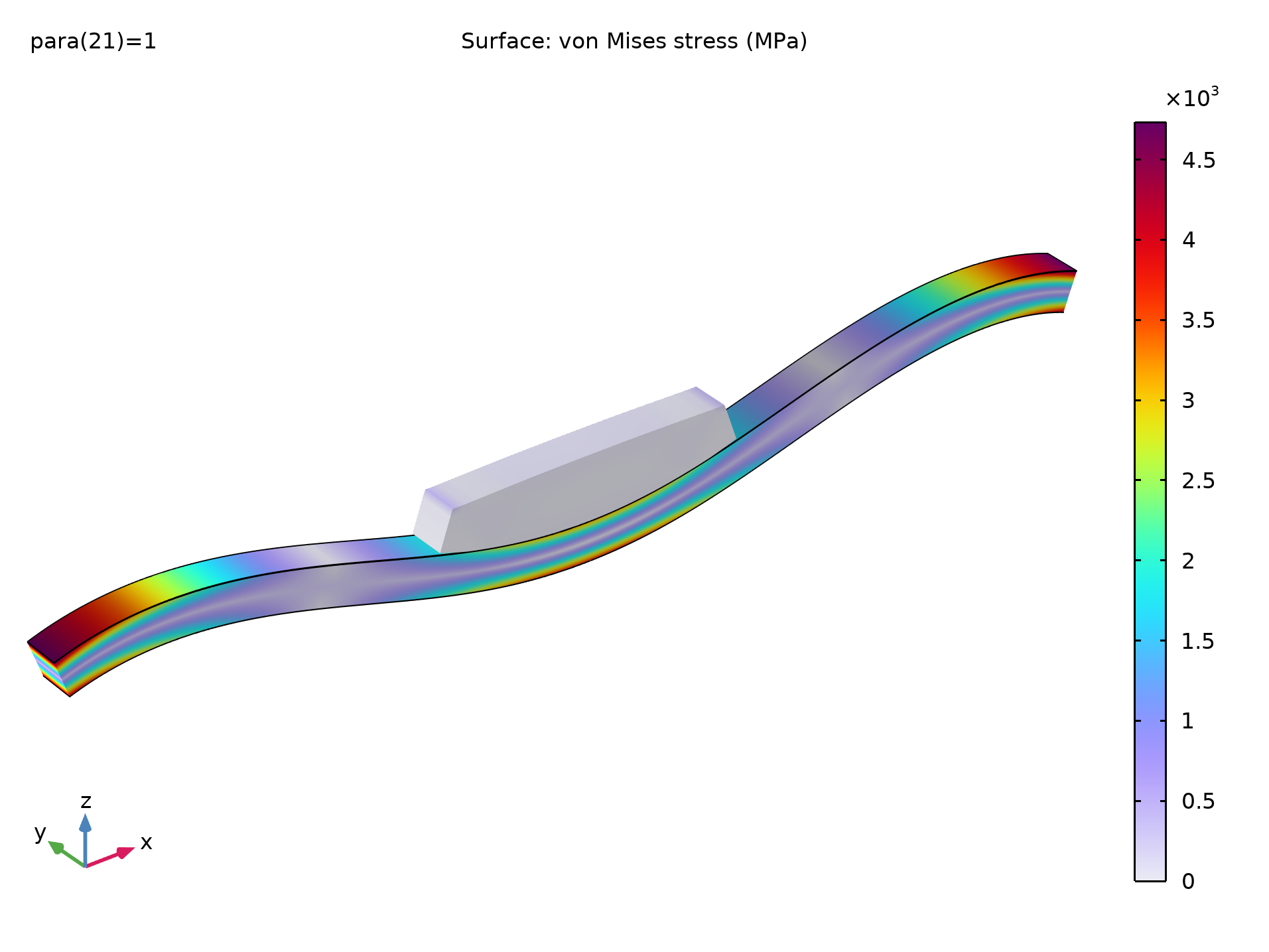
This conceptual example shows how to calculate critical points in models with contact. The model consists of a block modeled with the Solid Mechanics interface pressing on an arch modeled with the Shell interface. The contact problem is solved using the augmented Lagrangian method. The ... Read More
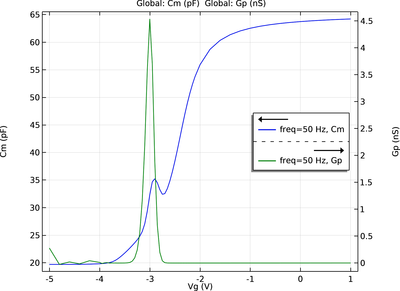
This tutorial compares experimental data from the literature with a COMSOL model of a MOSCAP with interface traps (surface states). The Trap-Assisted Surface Recombination feature is used to simulate the effects of the trap charges and the processes of carrier capturing and emitting by ... Read More
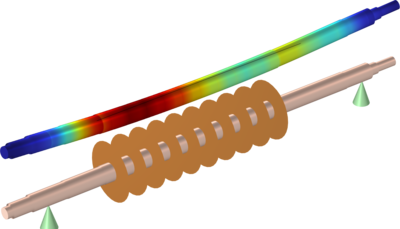
The fluid flow in seals causes a strong restoring radial force, opposing the shaft motion. Also, there is a cross-coupled force due to the axial variation of the circumferential flow. The first type of force always has a stabilizing effect on the rotor, whereas the second one can cause ... Read More
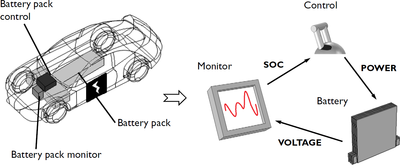
This is a template base model containing the physics, geometry and mesh of a lithium-ion battery, defined in 1D. The model makes use of four lithiation parameters which are used to define the relative balancing of the negative and positive electrodes, as well as global cell state of ... Read More
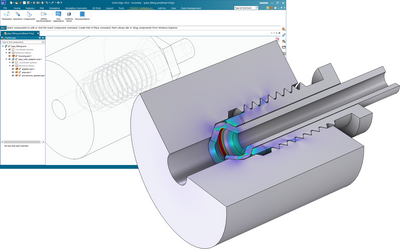
This tutorial model shows the setup of a 2D axisymmetric stress analysis, through contact, of a 3D threaded pipe fitting. The example involves synchronizing the 3D Solid Edge® geometry and selections, which specify the faces in contact, with the 2D geometry in COMSOL ... Read More
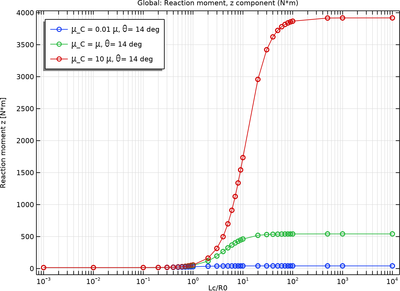
In this example, it is demonstrated how to extend the built-in linear elastic material model to a Cosserat material through the addition of microrotation degrees of freedom. A cylindrical bar under pure torsion is analyzed and the effect of the Cosserat length scale parameter on the ... Read More
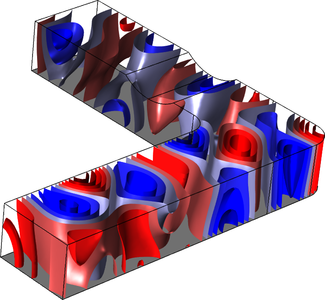
In this tutorial the acoustic behavior of a duct or waveguide with a right-angled bend is analyzed. The model uses port boundary conditions at the inlet and outlet. The ports can capture and treat non-plane propagating modes in waveguides, extending the analysis above the first cutoff ... Read More
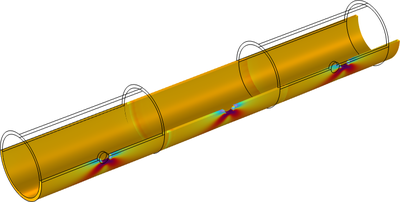
This tutorial model shows how to model a structure using both shell and solid elements, and how to create the transition between them. Results are compared between the shell solution and the full 3D solution, and the effects of the transition are highlighted. Read More
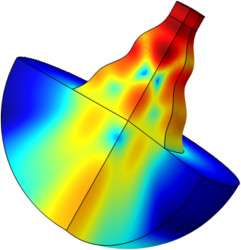
A plane-wave mode feeds an axisymmetric horn radiating from an infinite baffle toward an open half space. The radius of the waveguide attached to the horn throat is assumed to be fixed, as well as the depth of the horn and the size of the horn mouth attached to the baffle. By varying the ... Read More
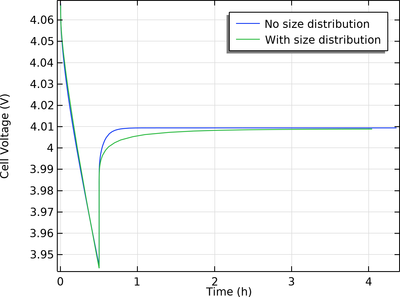
Battery electrodes featuring large heterogeneities in terms of particle sizes may sometimes not be adequately described by homogenized models using one single particle size only. As an alternative to adding multiple instances of the Additional Porous Electrode material node, this ... Read More


