Explore the innovative ways multiphysics simulation is being used worldwide to advance research
Multiphysics modeling and simulation drives innovation across industries and academia — as is evidenced by the many uses showcased in the technical papers and posters presented by engineers, researchers, and scientists at the COMSOL Conference each year.
Draw inspiration from the recent proceedings collected below, or, to find a specific presentation or filter by application area or conference year/location, use the Quick Search tool.
View the COMSOL Conference 2026 Collection
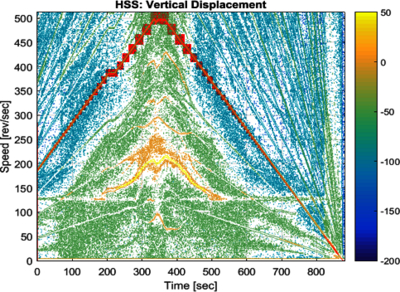
In addition to using advanced functions built-into the engine of the COMSOL Multiphysics® software, we integrate dynamic properties of rotating components that are measured or pre-computed. Here, it is shown how to integrate fluid-film characteristics and take advantage of post ... Read More
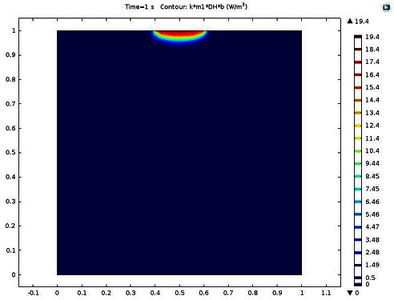
The purpose of this study is to predict, with a multiphysics model, the degradation area of a composite material when a current is injected into the material. The main physical phenomenon is an exothermic reaction, with an irreversible nonlinear variation of the electrical conductivity. ... Read More
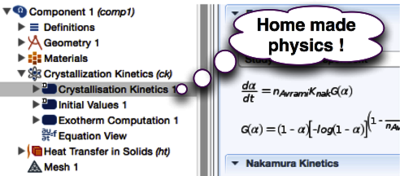
Crystallization phenomena are of first interest in several industrial applications (polymer forming processes, metallurgy, phase change flow, energy storage...). A classical way to model the crystallization evolution is using the Nakamura kinetics law. In this paper, a novel physics ... Read More
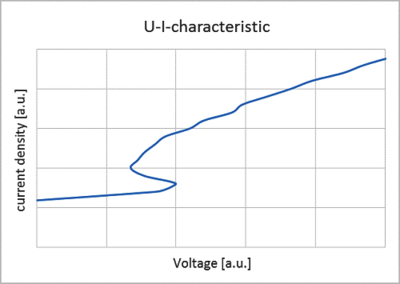
High power CO2 lasers have been the workhorses for sheet metal cutting, welding and many more applications in materials processing during the past decades. Even though a significant replacement by fiber coupled lasers takes place, there are still many applications that benefit from the ... Read More
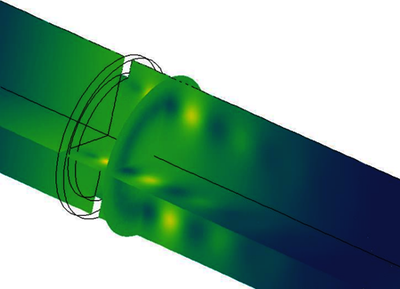
The acoustic scattering through a circular orifice plate in a duct with low Mach number flow (M=0.1) is computed using the Linearized Navier-Stokes physics interface of COMSOL Multiphysics®. The work by Kierkegaard et al. is extended to account for higher order acoustic modes, i.e., ... Read More
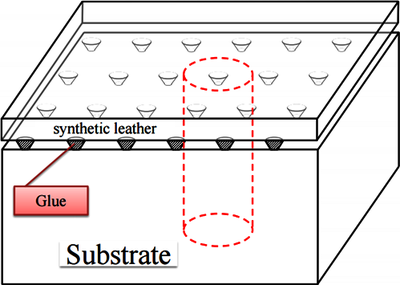
The lamination of substrates with thin coatings is commonly used in furniture, automotive and avionic industries. In the lamination process the hot melt adhesives are widely used and typically activated at temperatures from 80°C to 140°C by resistive heating. This requires a heat ... Read More
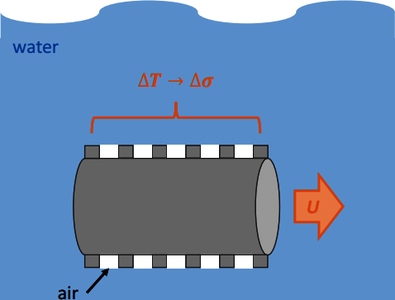
The thermocapillary effect is widely used in microfluidic applications for sensing and actuation and can also be used to generate rigid-body motion. Furthermore, it is possible to cast Marangoni flows to achieve controllable rigid-body motion in 3D space. To this effect, here we present ... Read More
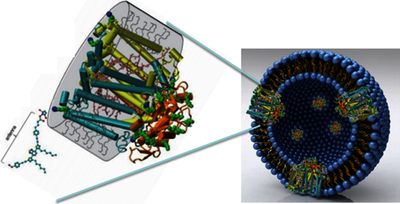
Giant vesicles (GVs) are artificial chemical systems largely used as cell models, since they are micrometer-sized closed compartments bounded by a semi-permeable membrane, which in turn is composed by self-assembling amphiphiles. By opportunely engineering the lipid membrane and by ... Read More