
Lorenzo Bortot, CERN, Switzerland
Engineers and physicists at CERN go to great lengths to ensure that the high-power superconducting magnets that maintain the circular trajectory of particles inside the Large Hadron Collider (LHC) do not revert to a resistive state, an event known as a quench. To understand and prevent quench events, Lorenzo Bortot, an electrical engineer and research fellow at CERN, used numerical simulation to develop a multiphysics, multiscale, and multirate representation of the electrodynamics and thermal evolution of a quench event.
Suggested Stories

Modeling Acoustical Properties of Porous Media in COMSOL®
A guest blogger from the University of Sheffield introduces the Johnson–Champoux–Allard–Lafarge (JCAL) model for ...

Silent Air Cooling: A New Approach to Thermal Management
Removing heat from electronic devices is a necessity that up until now was achieved by rotary fans. Tessera, a company ...
Designing an Eco-Friendly Anode Baking Process with Numerical Modeling
Aluminum is extracted through the Hall–Héroult process, during which it is removed from bauxite using green anodes. A ...
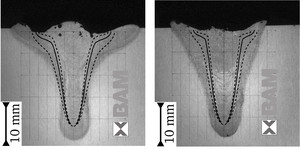
Magnets Improve Quality of High-Power Laser Beam Welding
High-power laser beam welding uses a localized heat source to achieve narrow deep welds and high welding rates. ...


