
Lorenzo Bortot, CERN, Switzerland
Engineers and physicists at CERN go to great lengths to ensure that the high-power superconducting magnets that maintain the circular trajectory of particles inside the Large Hadron Collider (LHC) do not revert to a resistive state, an event known as a quench. To understand and prevent quench events, Lorenzo Bortot, an electrical engineer and research fellow at CERN, used numerical simulation to develop a multiphysics, multiscale, and multirate representation of the electrodynamics and thermal evolution of a quench event.
Suggested Stories
Optimizing Screen Protection During the Manufacturing Process
Cover glass, the screen surface material used for tablets and cell phones, offers exceptional smoothness, a mark-free ...
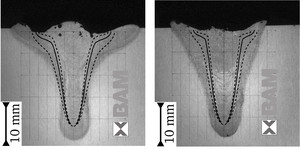
Magnets Improve Quality of High-Power Laser Beam Welding
High-power laser beam welding uses a localized heat source to achieve narrow deep welds and high welding rates. ...
Generative Design Puts Hydrogen Fuel Cell Development in High Gear
Toyota Research Institute of North America (TRINA) is working on hydrogen-powered vehicles. The TRINA team is using ...
Keynote: Solving Problems in the Food Processing Industry with Multiphysics Models
At Conagra Brands, Soon Kiat Lau and his team use multiphysics simulation to solve common challenges in the food ...


