
N. Grundy
SMS Concast, Switzerland
The process of continuous casting has transformed steel production, saving valuable resources while improving steel quality and process efficiency. Continuous casting involves carrying molten refined steel to a caster. There, water-cooled copper molds are used to form steel strands that are cut and then cooled. High-quality steel production requires minimizing the presence of non-metals in the steel, improving the microstructure, and maintaining even composition by reducing the segregation of alloying elements. Engineers at SMS Concast, a Switzerland-based company specializing in continuous casting technology, have used COMSOL Multiphysics to model mechanical deformations, the fluid motion present as molten steel flows into the molds, and the cooling process. Using their simulations, they have studied coupled physics that would be impossible to model otherwise – such as the heat transfer during initial solidification and the electromagnetic fields generated by stirring equipment.
Suggested Stories

5 Real-World Examples of Modeling and Simulation for Food Safety
Consumer confidence in food safety reached a record low in 2024, making it important for companies to guarantee the ...
Addressing Oil Spill Cleanup Using Hydrophobic Meshes
Engineers at Amphos 21 tested a new solution for different oil spill scenarios, hydrophobic meshes, with numerical ...
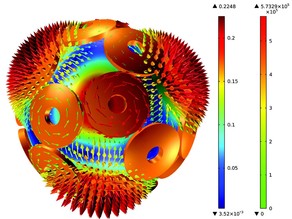
Reduced-Weight Reaction Sphere Makes Way for Extra Satellite Payload
CSEM is a private applied research and development center specializing in micro-technology, system engineering, micro ...
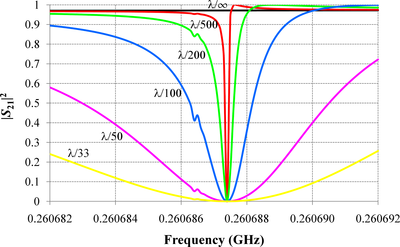
A 100-Fold Improvement in Lithography Resolution Realized with a 150-Year-Old “Perfect Imaging” System
The idea of "perfect imaging", that is a resolution less than the wavelength of light producing the image, was first ...


