
N. Grundy
SMS Concast, Switzerland
The process of continuous casting has transformed steel production, saving valuable resources while improving steel quality and process efficiency. Continuous casting involves carrying molten refined steel to a caster. There, water-cooled copper molds are used to form steel strands that are cut and then cooled. High-quality steel production requires minimizing the presence of non-metals in the steel, improving the microstructure, and maintaining even composition by reducing the segregation of alloying elements. Engineers at SMS Concast, a Switzerland-based company specializing in continuous casting technology, have used COMSOL Multiphysics to model mechanical deformations, the fluid motion present as molten steel flows into the molds, and the cooling process. Using their simulations, they have studied coupled physics that would be impossible to model otherwise – such as the heat transfer during initial solidification and the electromagnetic fields generated by stirring equipment.
Suggested Stories
Behind the Rumble and Roar of Mahindra Motorcycles
Optimization is a subtle and delicate art, especially when it comes to motorcycles. Regulatory requirements on pass-by ...
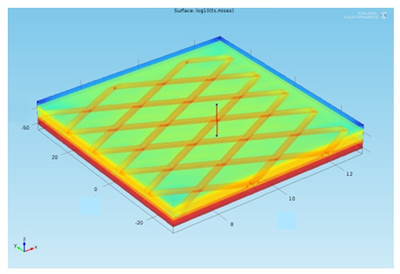
Boeing Simulates Thermal Expansion in Composites with Expanded Metal Foil for Lightning Protection of Aircraft Structures
Carbon fiber composites are used extensively throughout the body of modern aircraft, such as the Boeing 787 ...
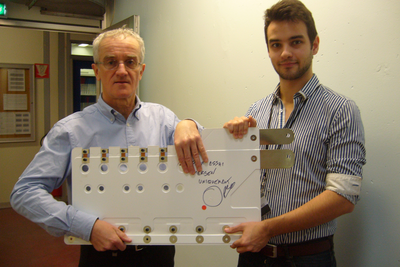
Control of Joule Heating Extends Performance and Device Life
Large electrical systems carrying high currents could pose a danger if any of their components, such as fuses and bus ...
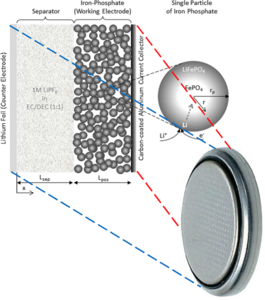
Highly Accurate Li-ion Battery Simulation
Battery management systems (BMSs) are designed to protect the batteries and predict their charge level. They use ...


