
India's National Chemical Laboratory Optimizes Fuel Cells via Modeling
Ashish Lele, National Chemical Laboratory, India
Inefficient and potentially harmful diesel generators are still the prevailing method of decentralized power generation for telecommunications in urban and rural India. Researchers at the National Chemical Laboratory are investigating proton exchange membrane (PEM) fuel cells, which are strong candidates for this industry because of their cleanliness, compatibility, and efficiency exceeding 30% (with work underway to further increase this value). Using multiphysics modeling and simulation, the researchers are working to determine an optimal configuration of fuel cell properties that yields maximum efficiency and performance.
Suggested Stories
Analyzing the LHC Magnet Quenches
Engineers and physicists at CERN go to great lengths to ensure that the high-power superconducting magnets that ...
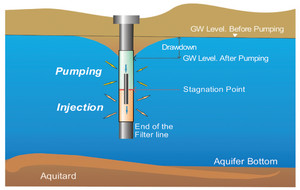
Pumping and Injecting from a Single Borehole
Professor Dr. Martin Sauter leads a group at the University of Göttingen in research on hydrogeology. Cooperating with ...
Upgrading the Nuts and Bolts of the Electrical Grid for a New Generation
Migrating the electrical grid to a “smart grid” is usually discussed in terms of IT issues or embedded systems. Yet, ...
Simulation Enables the Next Generation of Power Transformers and Shunt Reactors
From power generation to its distribution to end users, power transformers and shunt reactors are used throughout the ...


