
NEXT ENERGY Analyzes Heat Transfer in Lithium-Ion Batteries
Gerd Liebig, Pamina Bohn, NEXT ENERGY EWE Research Centre for Energy Technology, Germany
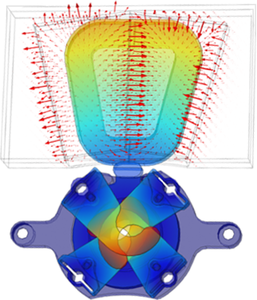
Lithium-ion batteries, which have a tendency to degrade at high temperatures, must adhere to stringent regulations guaranteeing their ability to withstand operating temperature fluctuations. Researchers at NEXT ENERGY used heat transfer modeling to study whether high welding temperatures can create enough temperature propagation within cells to cause irreversible damage, such as electrolyte decomposition and capacity loss. They discovered that tab welding can, in fact, induce irreversible damage, but laser welding is significantly less detrimental.
Suggested Stories
Invisible Connections Will Unveil our 5G Future
The impending evolution of ultrafast 5G networks from concept to reality will entail significant effort into the ...
Fuel Cells Poised to Replace India’s Diesel Generators
Inefficient and potentially harmful diesel generators are still the prevailing method of decentralized power ...

Analysis and Simulation of Rock Properties
VSG provides high-performance 3D visualization toolkits and software for a number of industries, including materials ...
Keeping Cool: SRON Develops Thermal Calibration System for Deep-Space Telescope
Deep-space telescopes require ultrasensitive detectors and calibration to pick up weak far-infrared signals. The SpicA ...


