
SRON Develops Thermal Calibration System for Deep-Space Telescope
C. de Jonge
SRON, Netherlands
Deep-space telescopes require ultrasensitive detectors and calibration to pick up weak far-infrared signals. The SpicA Far-InfraRed Instrument (SAFARI), an infrared camera that will fly aboard the Space Infrared Telescope for Cosmology and Astrophysics (SPICA), has sensors that measure the far-infrared spectrum. The SAFARI system includes a radiation source, needed for calibration, that is so powerful it can throw off the readings. Thus, heat management becomes a vital consideration, as the sensors must be kept at cryogenic temperatures. Stainless steel suspension strings hold the radiation source to a frame, preventing it from contacting other equipment and minimizing heat transfer and vibrations. Chris de Jonge, design engineer at the SRON Netherlands Institute for Space Research, has used COMSOL Multiphysics to aid in the design of this thermally insulating suspension system. He also used his COMSOL simulation results to optimize the geometry of an iris and shutter mechanism inside the calibration system, developing an optimal coil design and minimizing current and heat dissipation.
Suggested Stories
Seeking Out Electrical Arcing Regions in Satellite Systems
Space is the epitome of an unpredictable and harsh environment. These conditions are near impossible to replicate via ...
Magnets Improve Quality of High-Power Laser Beam Welding
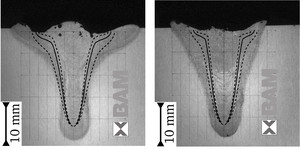
High-power laser beam welding uses a localized heat source to achieve narrow deep welds and high welding rates. ...
Undocking Better Boat Landing Designs for Offshore Wind Turbines
Wood Thilsted, a leader in offshore engineering, used structural analysis to design boat landings that can withstand ...

Simulating the Pressure in an Ultrahigh Vacuum System
The ETpathfinder research facility in the Netherlands was built in anticipation of the proposed Einstein Telescope ...


