
MIT Optimizes the Design of a Nuclear Fusion Machine with Simulation
Jeffrey Doody, MIT Plasma Science and Fusion Center, Cambridge, MA, USA
For over 50 years, power generation through nuclear fusion has been the focus of international research efforts to demonstrate its use as a clean, safe, and practically limitless source of energy. Researchers at the MIT Plasma Science and Fusion Center (PSFC) proposed the Advanced Divertor eXperiment (ADX) tokamak, which is a compact nuclear fusion machine with a modular design, to serve as an R&D testbed and further aid in the development of this technology. To optimize the design of the ADX tokamak, MIT researchers are using numerical simulation to ensure its vacuum vessel can survive worst-case scenario plasma disruption events.
Suggested Stories
Giving Furniture Testing a Leg Up
Chairs must meet quality standards, which requires lengthy and costly testing. To reduce the burden on manufacturers, ...
Analyzing the LHC Magnet Quenches
Engineers and physicists at CERN go to great lengths to ensure that the high-power superconducting magnets that ...
The Sweet Side of Simulation Behind the Scenes at Nestlé
To produce chocolate, wafers, cereals, and everything in between, R&D engineers at Nestlé’s Product Technology ...
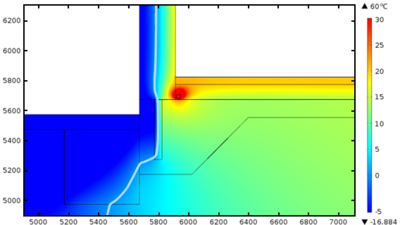
Using Multiphysics Simulation to Prevent Building Damage
In addition to surviving normal winters, a strong building must be able to survive the worst winters expected in a 50 ...


