
Knowles Uses Simulation to Optimize Hearing Aid Performance
Brenno Varanda, Knowles Corporation, Illinois, USA
Nearly 20% of the United States population has some degree of hearing impairment. Despite the relative inconspicuousness and perceived simplicity of hearing aids, their development involves complex, time-consuming, and computationally expensive research. The hearing aid industry is in dire need of a simplified model that can expedite the design process and provide options to consumers quicker. Engineers at Knowles Corporation have achieved this using COMSOL Multiphysics®. Employing a simplified “black box” circuitry model of a receiver coupled to a model of the vibroacoustic system, they drastically reduced the time it takes to optimize performance and bring a prototype to market.
Suggested Stories

Sonos Optimizes MEMS Microphone Design to Reduce Distortion from Wind Noise
Let's examine how Sonos has used simulation software to reduce the distortion caused by wind noise on their MEMS ...
Optimizing a CVD Process for a High-Performance Tungsten Material
Researchers at Forschungszentrum Jülich GmbH, Institute for Energy and Climate Research, and Max Planck Institute for ...
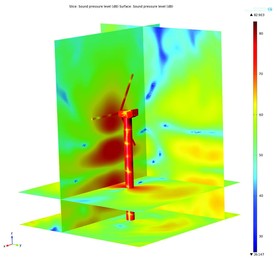
Wind Turbine Noise Reduction
Xi Engineering Consultants Ltd specializes in complex vibration issues, like those caused by wind turbines. The ...
A New Route to High Sensitivity Pressure Sensors
The environments in which sensors are most integral are often the most harsh and unforgiving, such as vacuum chambers, ...


