
Ivana Milanovic, University of Hartford, USA
While covering the required fundamental material in undergraduate academic programs is the top priority, students require an extra set of knowledge and skills to flourish in the workforce. This is especially true in science, technology, engineering, and mathematics (STEM) fields, where there is rarely an abundance of time for inquiry-based learning and the development of field-specific skills. To address this issue, the University of Hartford integrated multiphysics modeling into their curricula. Using the Application Builder in the COMSOL Multiphysics® software, the university created simulation-based laboratory assignments through apps, which enhanced students’ physical intuition and their ability to visualize physical concepts.
Suggested Stories
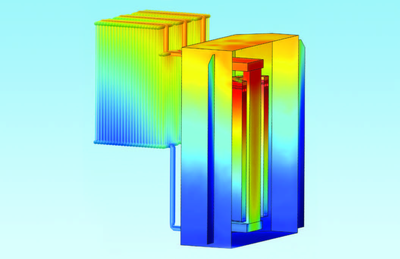
Simulation Enables the Next Generation of Power Transformers and Shunt Reactors
From power generation to its distribution to end users, power transformers and shunt reactors are used throughout the ...
Prototyping Antennas for Mobile Recording of TV Sports Events with Simulation
Researchers at Radiotelevisione Italiana (RAI) are optimizing circularly polarized antenna designs for recording live ...
Forecasting the Ice Loss of Greenland’s Glaciers with Viscoelastic Modeling
The Northeast Greenland Ice Stream’s discharge of ice into the ocean has been accelerating. To help forecast future ...
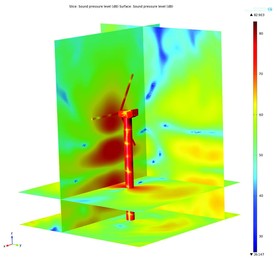
Wind Turbine Noise Reduction
Xi Engineering Consultants Ltd specializes in complex vibration issues, like those caused by wind turbines. The ...


