
Ivana Milanovic, University of Hartford, USA
While covering the required fundamental material in undergraduate academic programs is the top priority, students require an extra set of knowledge and skills to flourish in the workforce. This is especially true in science, technology, engineering, and mathematics (STEM) fields, where there is rarely an abundance of time for inquiry-based learning and the development of field-specific skills. To address this issue, the University of Hartford integrated multiphysics modeling into their curricula. Using the Application Builder in the COMSOL Multiphysics® software, the university created simulation-based laboratory assignments through apps, which enhanced students’ physical intuition and their ability to visualize physical concepts.
Suggested Stories

Magnets Improve Quality of High-Power Laser Beam Welding
High-power laser beam welding uses a localized heat source to achieve narrow deep welds and high welding rates. ...
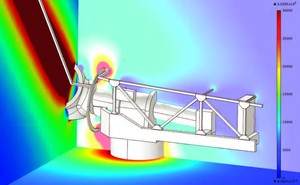
Lightning-Proof Wind Turbines
Søren Find Madsen, Global Lightning Protection Services A/S, Lejre, Denmark Global Lightning Protection Services A ...

Fully Coupled Hydromechanical Modeling of Fractured Media
Dr. Qinghua Lei of ETH Zürich demonstrates a novel method for modeling fully coupled hydromechanical processes in ...
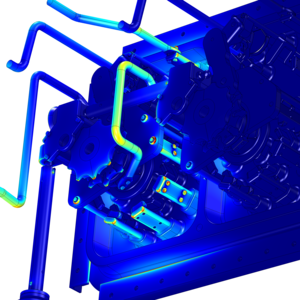
Dielectric Stress Simulation Advances Design of ABB Smart Grid-Ready Tap Changers
Consumers of power rely on fairly stable voltages. Transformers contain tap changers which vary the ratio of secondary ...


