
Defining Surface Plasmon Resonance Effects with Simulation
Sergei Yushanov, Jeffrey S. Crompton, Luke T. Gritter, and Kyle C. Koppenhoefer
AltaSim Technologies
Columbus, OH
USA
Surface Plasmon Resonance (SPR) is created by surface plasmons, coherent electron oscillations existing between any two materials where the real part of the dielectric function changes sign across the interface. SPR technology is based on the electromagnetic field component of incident light penetrating into a surface and it can be used to detect molecular adsorption on surfaces.
Plasmon excitation typically exists in two configurations: the Kretschmann-Raether configuration, where a thin metal film is sandwiched between a dielectric and air, and the incident wave is from the dielectric side; and the Otto configuration, where an air gap exists between the dielectric and the metal. Using COMSOL Multiphysics, the effect of the SPR on the electromagnetic field can be defined, which has allowed for the measurement of surface contaminants and nano-scale photonic devices.
Suggested Stories
The Sweet Side of Simulation Behind the Scenes at Nestlé
To produce chocolate, wafers, cereals, and everything in between, R&D engineers at Nestlé’s Product Technology ...

Solving the Superconductor Teaching Challenge with Apps
Superconductors can be a challenging subject to teach. Explore how a professor is addressing this problem with an open ...
Light, Strong, and Defect-Free Laser Welding: Perfecting the Process for the Automotive Industry
Dozens of safety features in modern automobiles help reduce risk while driving, but regardless of their complexity, ...
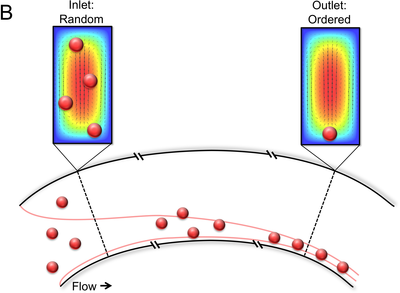
Modeling Inertial Focusing in Straight and Curved Microfluidic Channels
In many medical procedures and tests, it is necessary to isolate cells of interest for further analysis. Microfluidics ...


