
Marco Barink, Erica Coenen, TNO, Netherlands
The advantages of anisotropic properties in 3D printing materials have been difficult to exploit for product design, limited by material manufacturing and production methods. However, additive manufacturing is opening doors to material fabrication, allowing engineers to virtually design varying material properties into a single product. At the Netherlands Organization for Applied Scientific Research (TNO), researchers investigated virtual material design using multiphysics simulation and multiscale modeling.
To develop a procedure for designing anisotropy into 3D-printed structures, the researchers used COMSOL Multiphysics to study mechanical behavior in a unit cell, control material properties and the orientation of anisotropic fibers, and optimize local material distribution to achieve desired overall properties. To study material design on a larger scale, they extracted material parameters from the unit cell to include in a model of a full-scale 3D-printed object, and successfully applied methods of fully-coupled multiscale modeling to geometry and material design in several different applications.
Suggested Stories
Analyzing a Timeless Tradition Found in Ultra-Luxury Watches
Engineers at HEPIA, HES-SO Geneva are fine-tuning luxury-watch minute repeaters with a surrogate-model-led process ...
Better Ways to Heat and Cool Buildings
Adsorptive climate control systems can reduce the power required to heat and cool buildings by running primarily on ...
Accelerating Custom Capacitor Design with Simulation Apps
When a component is as ubiquitous as a capacitor, its design process needs to allow for a lot of customization. This ...
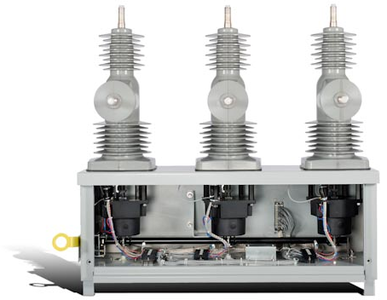
How Reclosers Ensure a Steady Supply of Power: It’s All in the Magnet
When a tree branch touches overhead cables and causes a momentary short circuit, your lights may flicker. A device ...


