Identifying Load Cycles to Determine the Fatigue Model
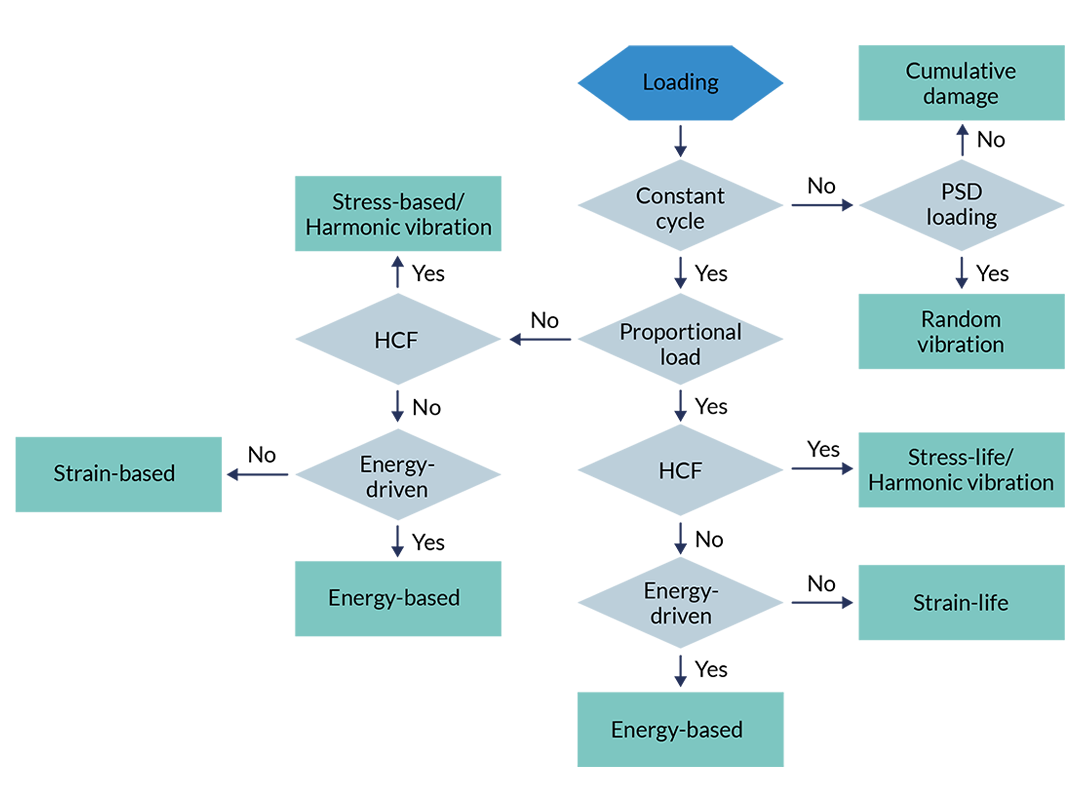
Before running a fatigue analysis, it is necessary to determine which fatigue model accurately reflects the case at hand. One may know which fatigue model to use based on prior knowledge from previous cases. If not, the choice of model can be decided based on the loading conditions and expected fatigue failure. Generally speaking, load cycles can be divided into the following cases: proportional, nonproportional, and variable amplitude loads.
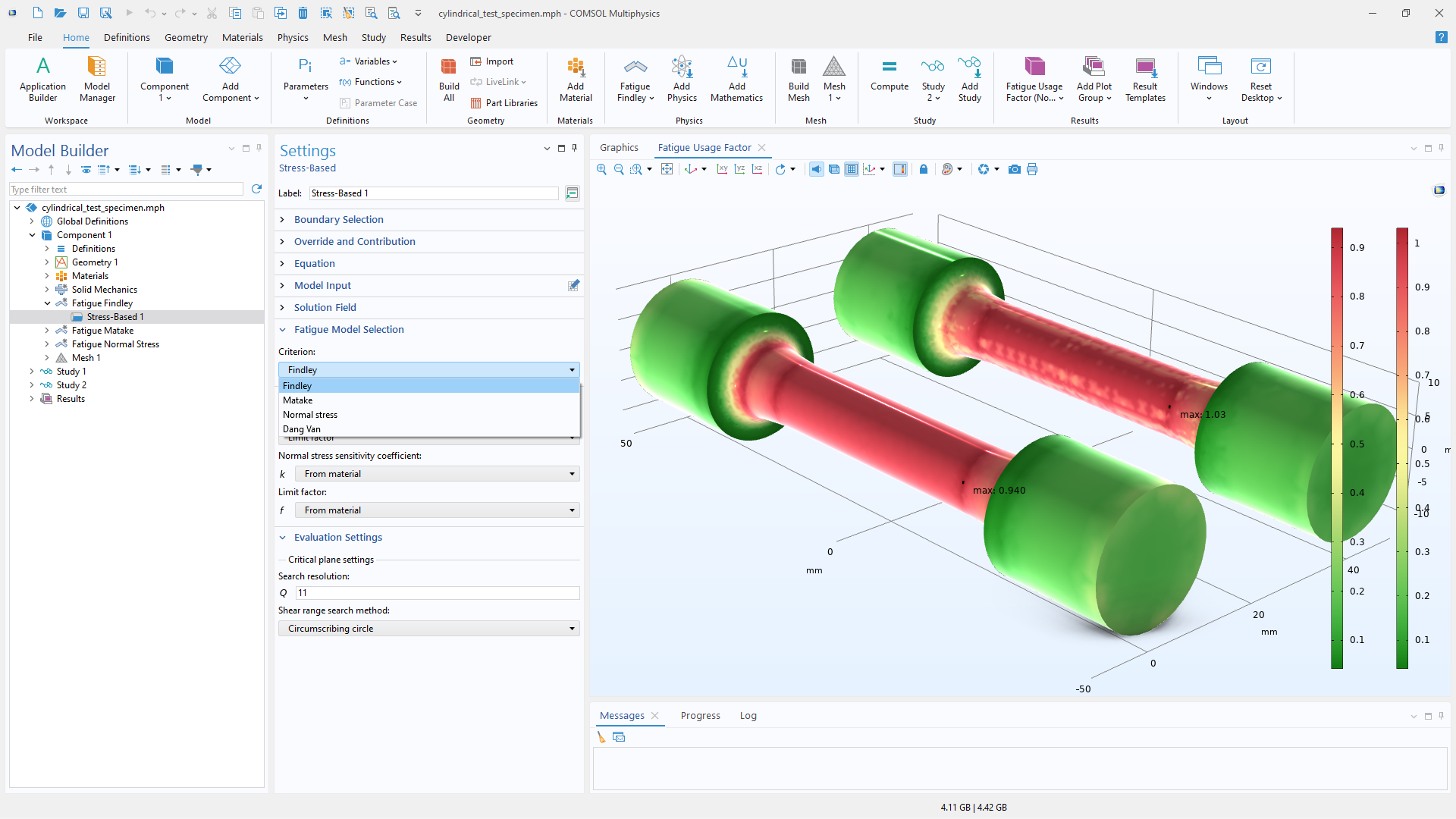
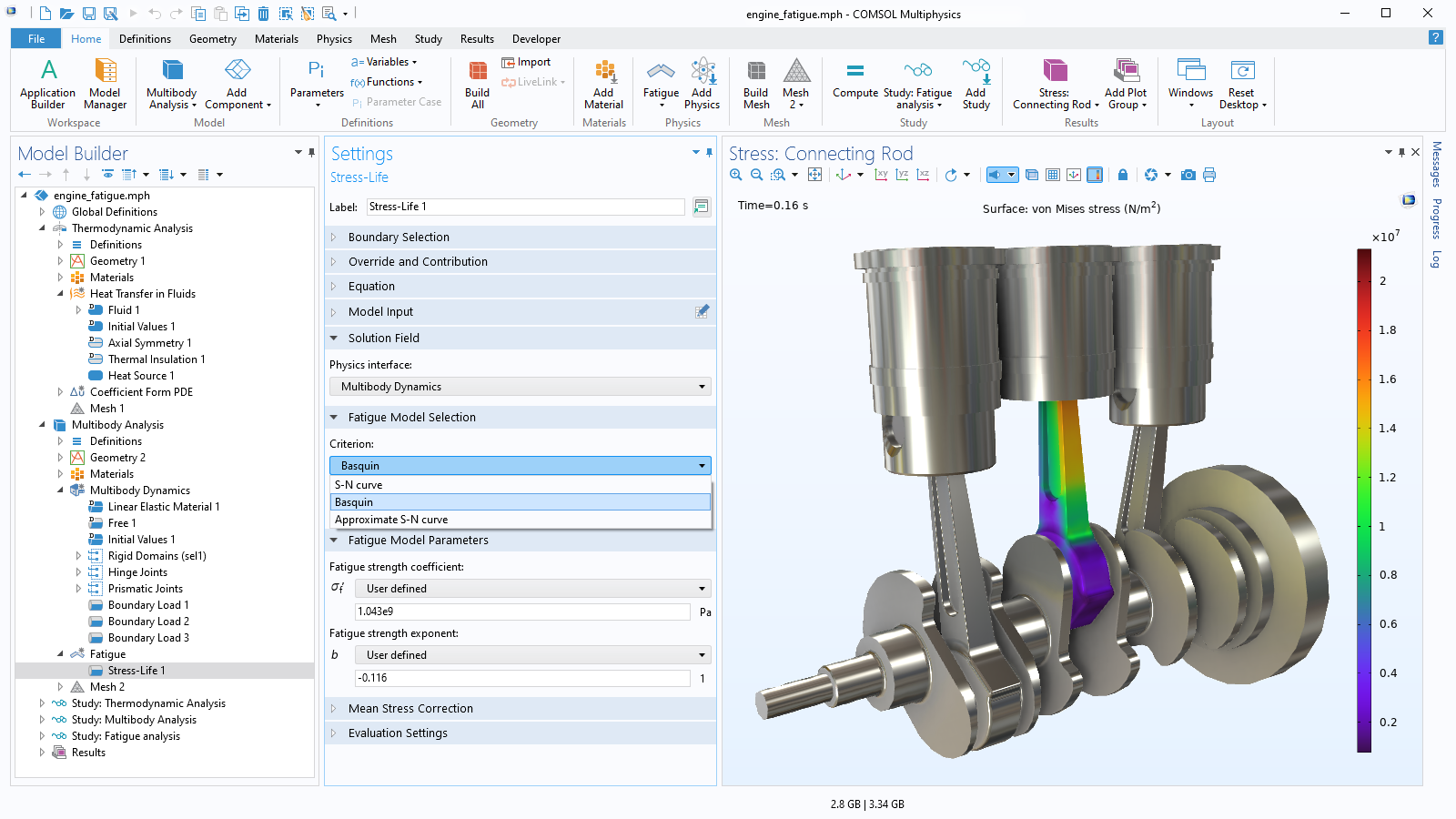
In proportional loading, the orientation of the principal stresses and strains does not change during the load cycle; for HCF, a stress-life model is used, and for LCF, a strain-life model. For nonproportional loading, the directions of principal stresses and strains vary: For HCF, a stress-based model is used, and for LCF, a strain-based model is used. In some cases, the stress or strain alone is not sufficient for characterizing the fatigue properties, and, in that case, energy-based models can be used.
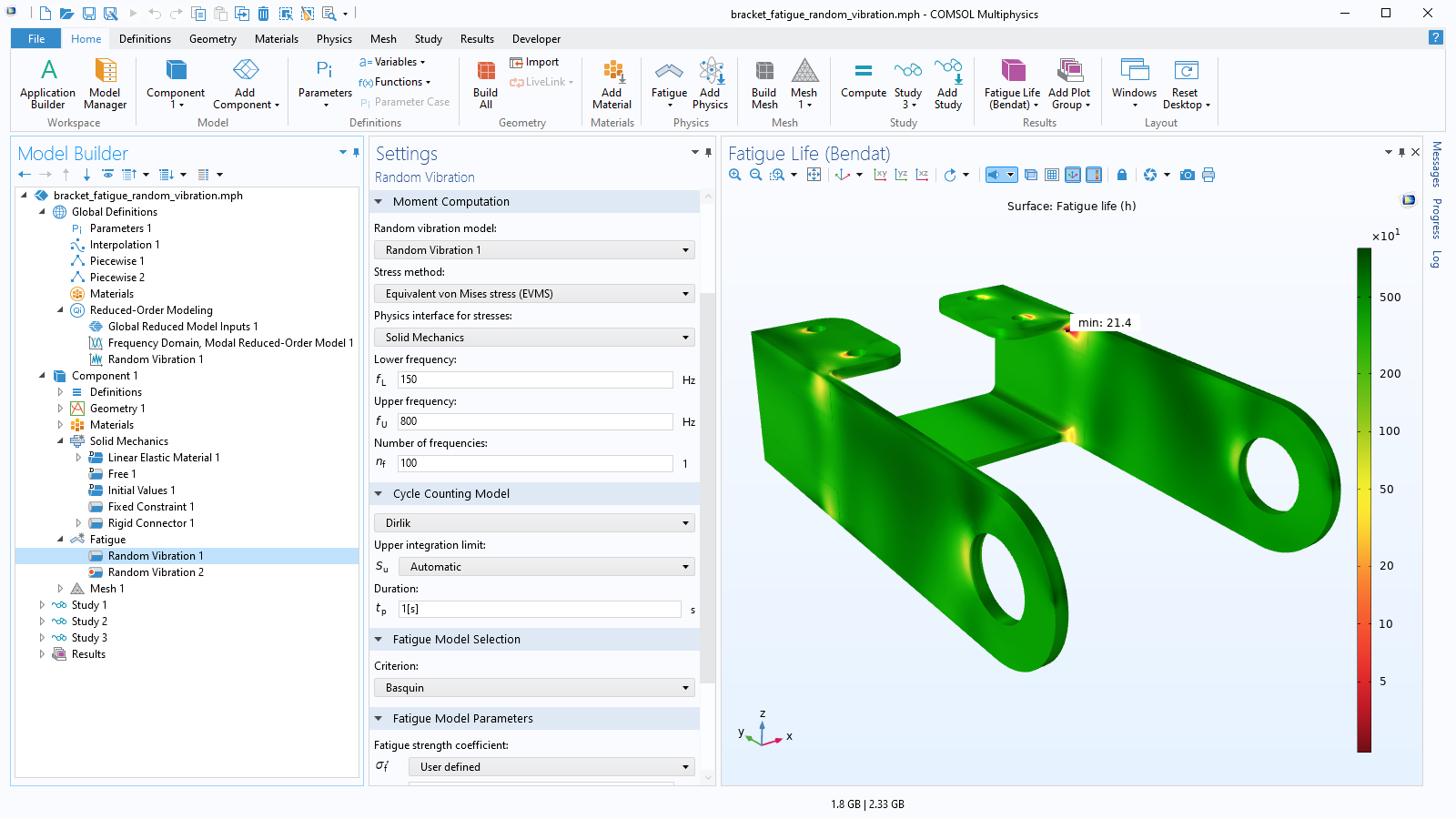
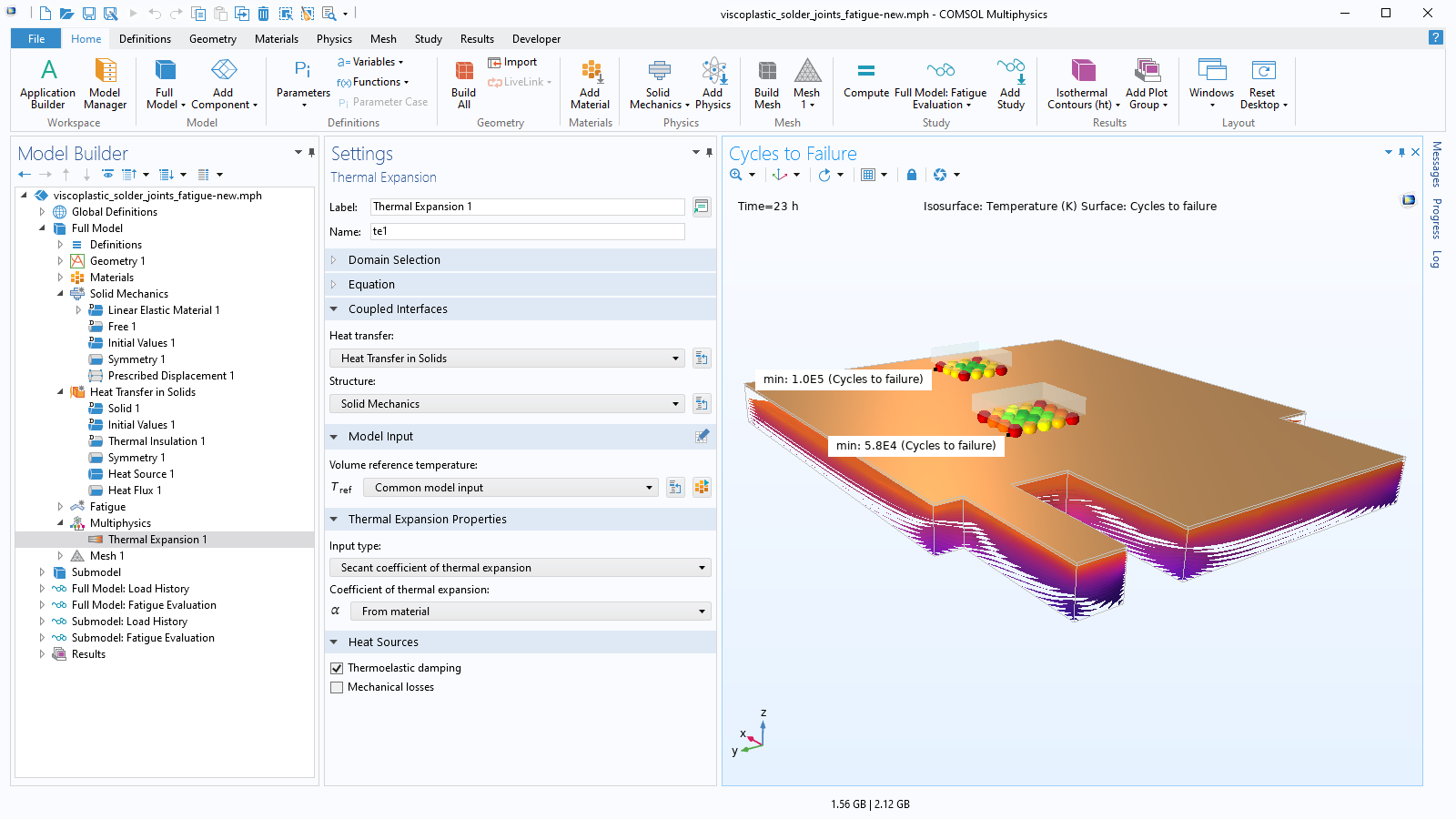
For variable amplitude loading, where there is not a constant cycle, the entire load history (or a sufficiently representative portion) is considered, in which case a cumulative damage fatigue model is used. Lastly, there is a random vibration fatigue modeling option that uses power spectral density (PSD) loading as an input.