Input Parameters and Quantities of Interest
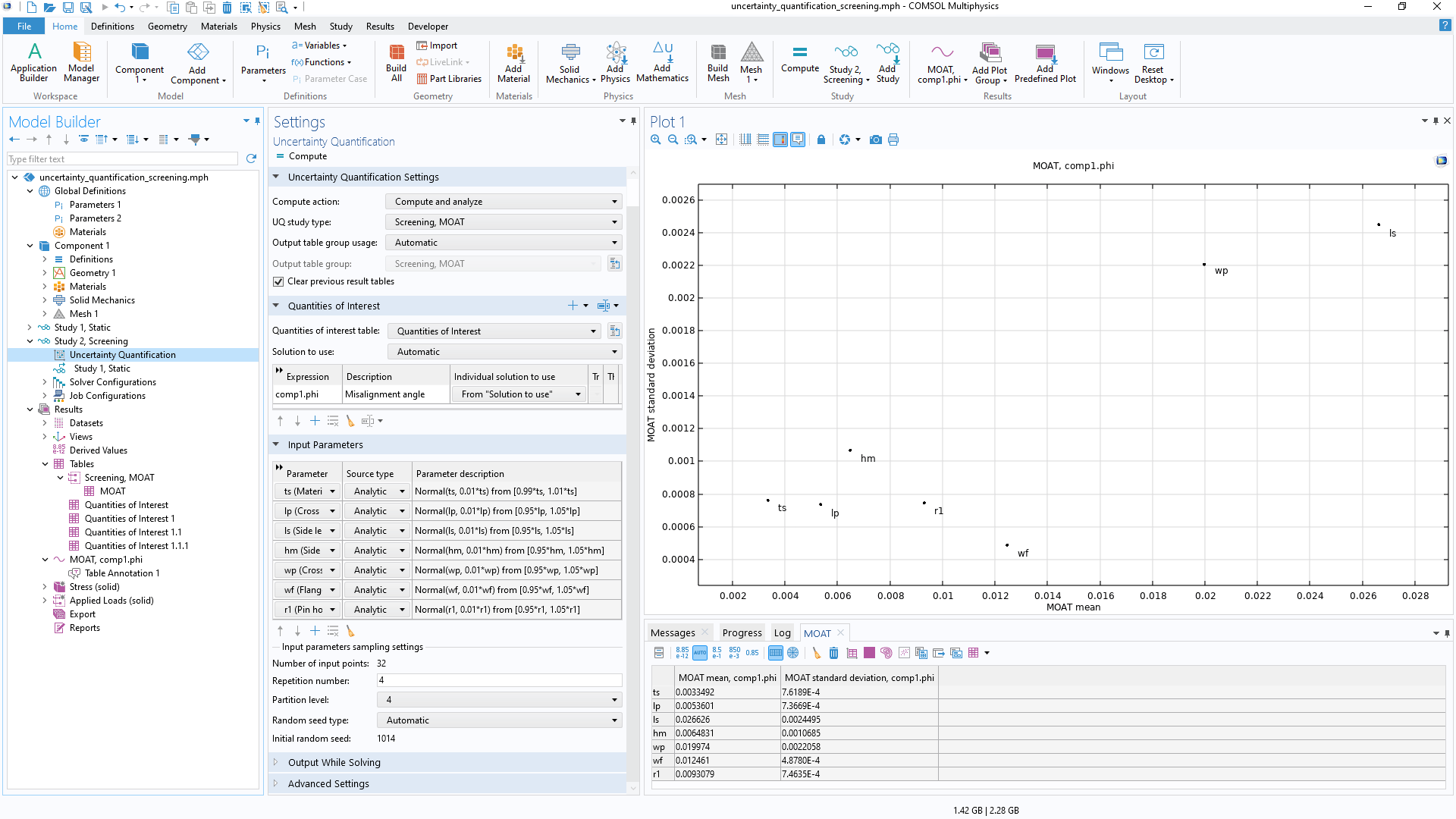
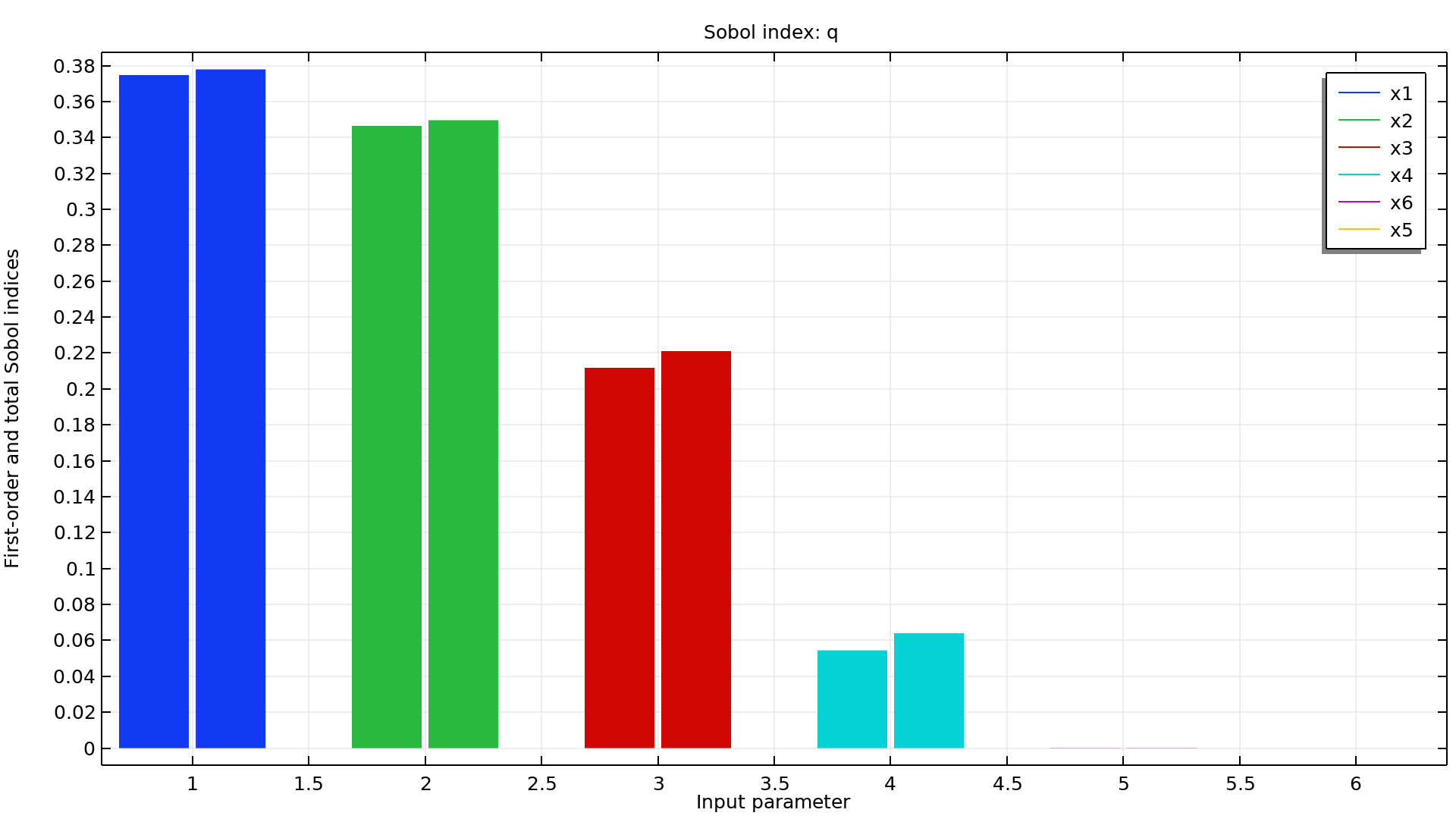
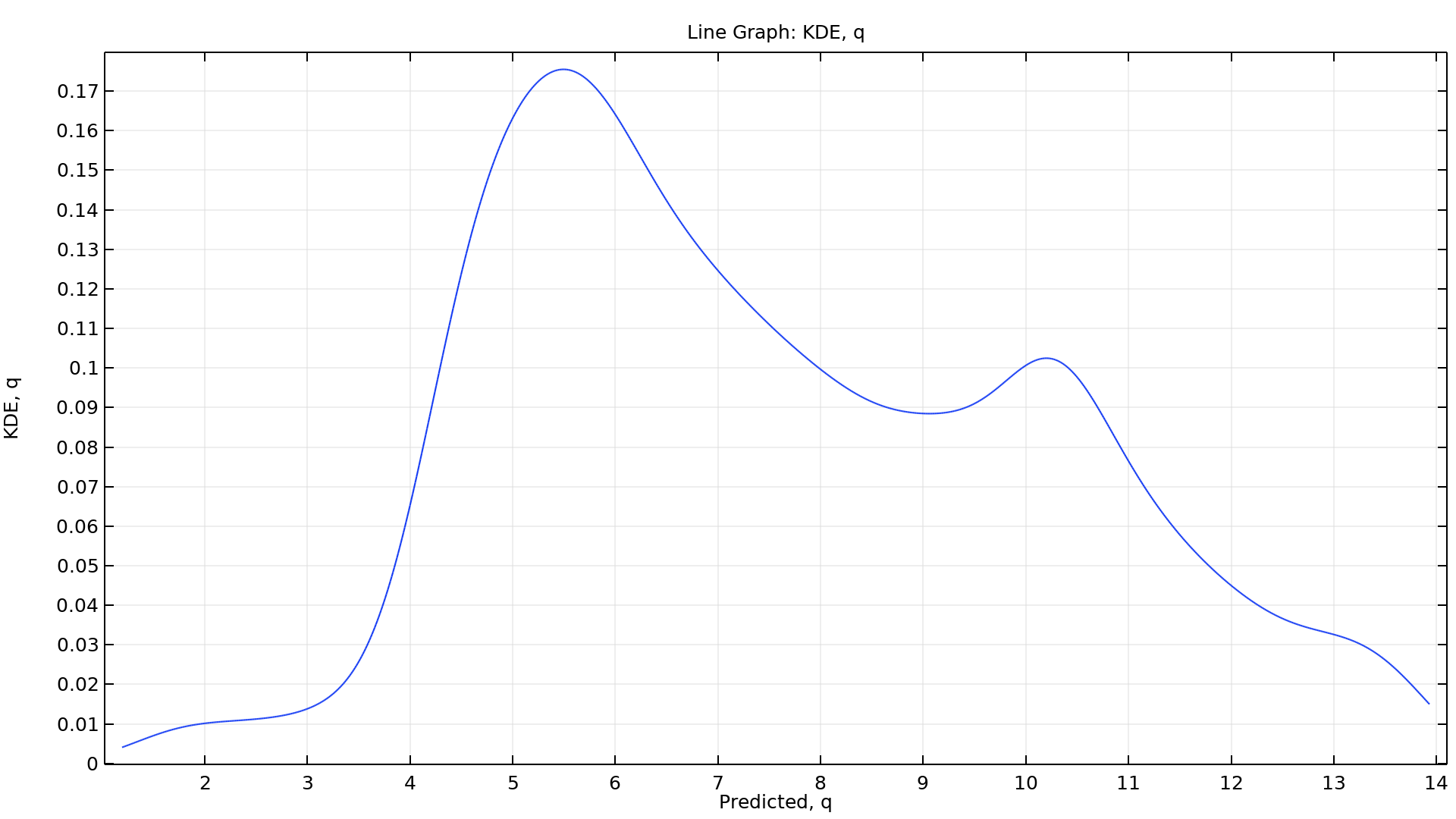
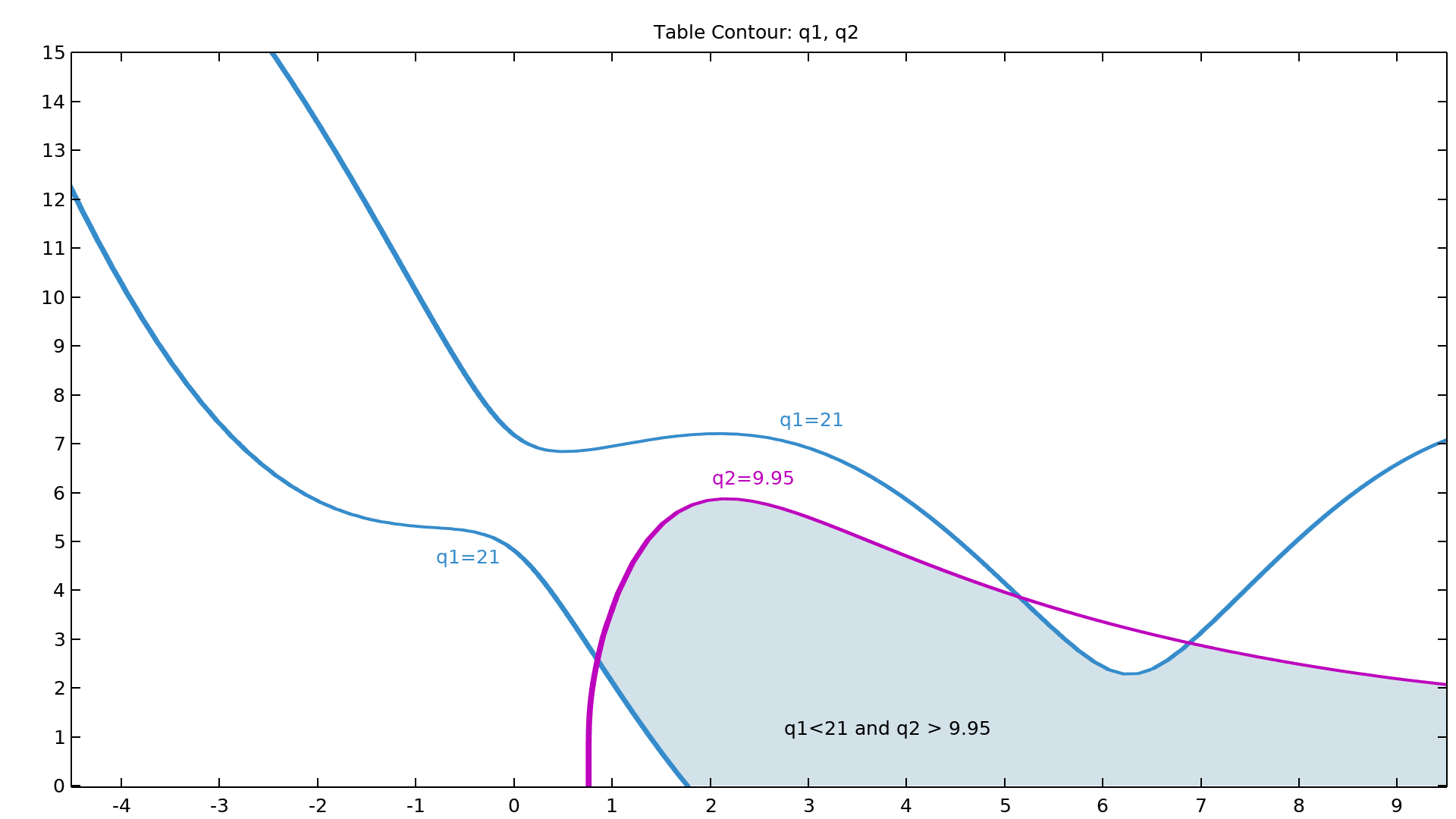
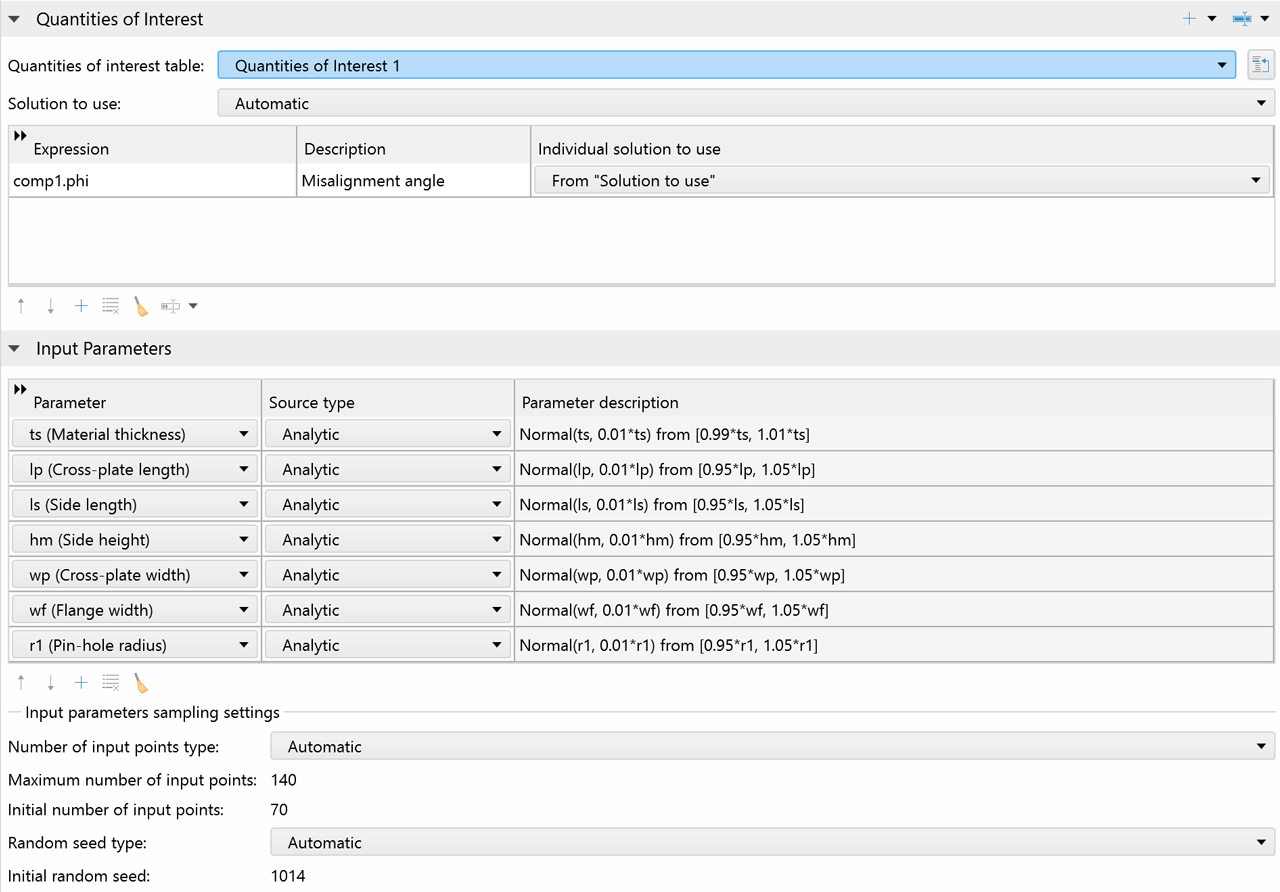
When running an uncertainty quantification study, a set of global quantities of interest is defined in terms of a COMSOL Multiphysics® model solution. As a result, the quantities of interest are functions of the input parameters. A set of study-dependent quantities of interest — for instance, time- or frequency-dependent expressions — can also be defined, in which case, the quantities of interest are functions of both the input parameters and the study-dependent parameters.
In the case of a structural analysis, the quantities of interest may be the maximum displacement, stress, or deflection angle. For a heat transfer or CFD analysis, the quantities of interest may be maximum temperature, total heat loss, or the total fluid flow rate. For an electromagnetics simulation, they may be resistance, capacitance, or inductance. For a MEMS simulation, they may include the frequency-dependent output power from a piezoelectric device. Since the Uncertainty Quantification Module is applicable to any physics model computed with the COMSOL Multiphysics® software, as well as any mathematical expression of various solved-for field quantities, the choices for the quantity of interest are endless.
Any uncertain model input, whether it be a physics setting, geometric dimension, material property, or discretization setting, can be treated as an input parameter, and any model output can be used to define the quantities of interest. The input parameters can be sampled analytically with probability distributions or with user-specified data. The analytically sampled input parameters can be correlated and uncorrelated, where the correlated input parameters can be grouped into correlation groups and sampled with the Gaussian copula method.